Basement finishing in Lewisburg, PA
Not every basement needs a rescue.
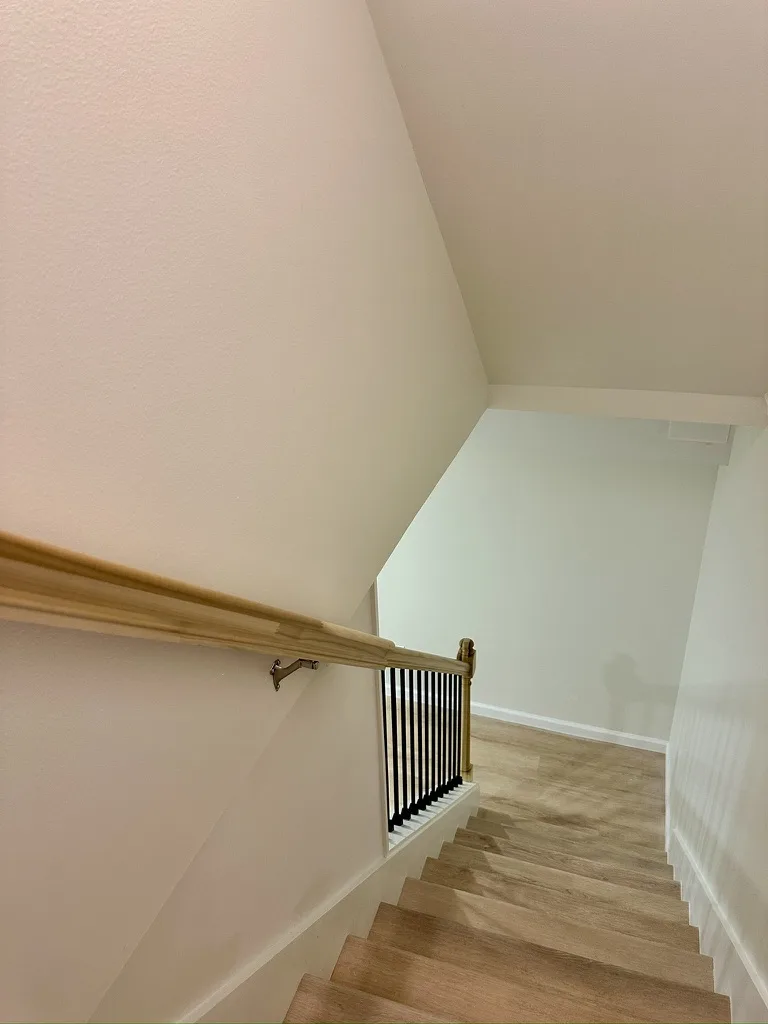
An unfinished basement turned into real living space — an exercise room wired for the equipment going into it, its own heating and cooling, and a side door that kept the whole job downstairs.
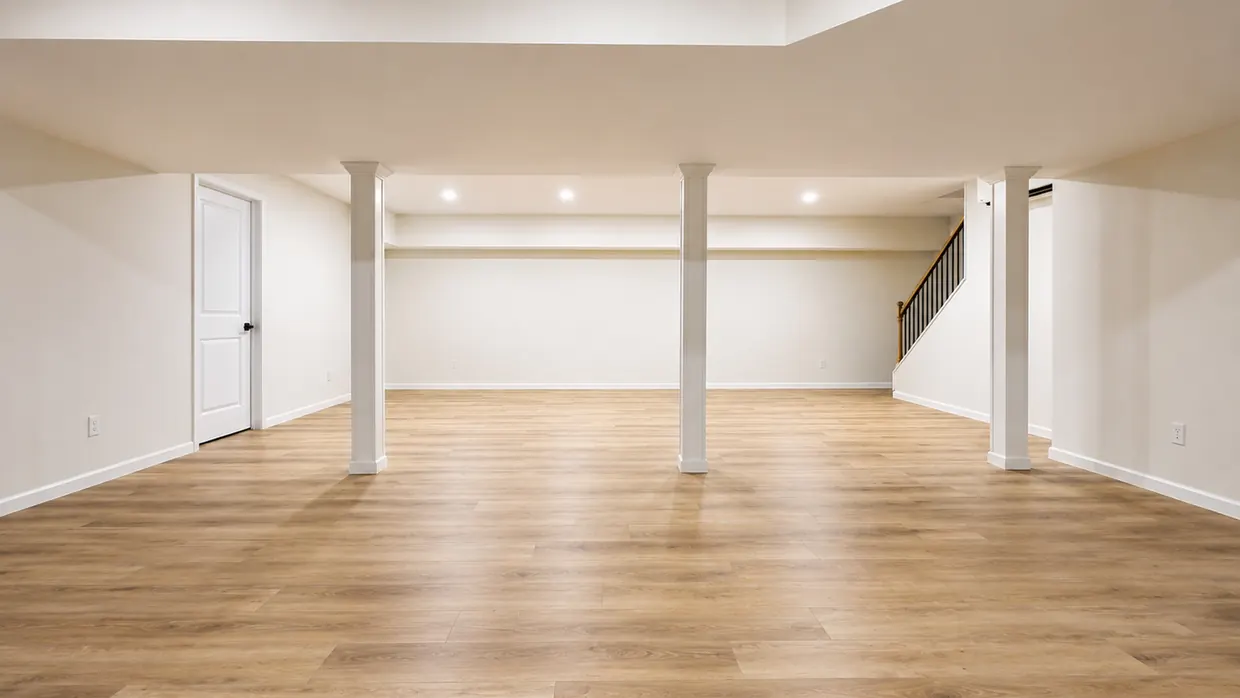
Some projects have a big problem to solve. This one really didn’t.
The homeowners had an unfinished basement and wanted to use it. We had good access, a clear plan, and a separate outside entrance that let our crews come and go without walking through the rest of the house.
It finished on time and on budget, and they were thrilled with it. But a few of the decisions behind the walls are worth talking about.
Planning the electrical for how the room gets used.
Part of the basement was going to be an exercise room, and that changed how we planned the electrical.
On an earlier basement in Winfield, a client brought in a big treadmill after we’d finished and found out it could overload the circuit it shared with the rest of the room. We went back and ran a dedicated circuit for it. We remembered that one.
So on this job we put in a new subpanel and planned dedicated circuits to the exercise room from the start. It’s a small decision while the walls are open. It’s a lot more annoying after they’re closed.
That’s the advantage of finishing a lot of basements. What you learned on the last house comes with you to the next one.
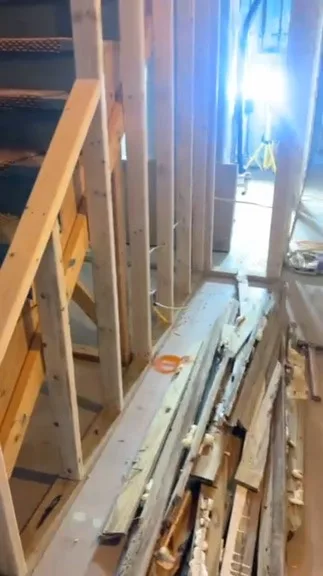
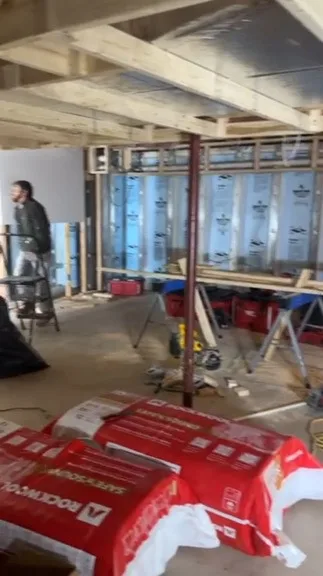
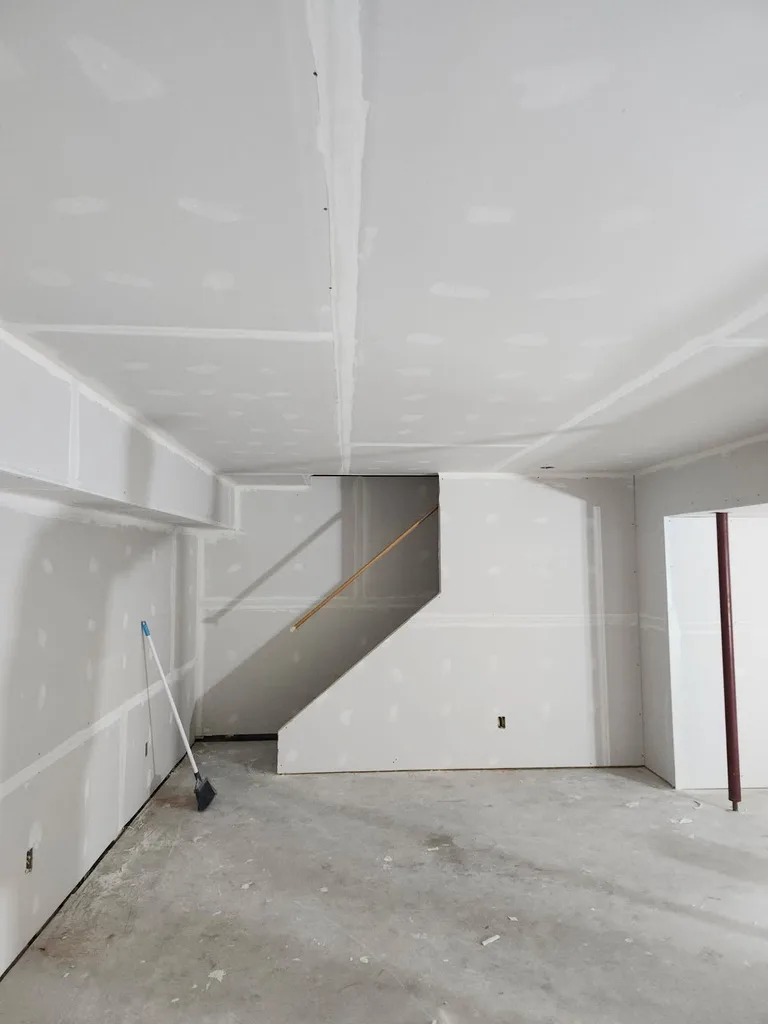
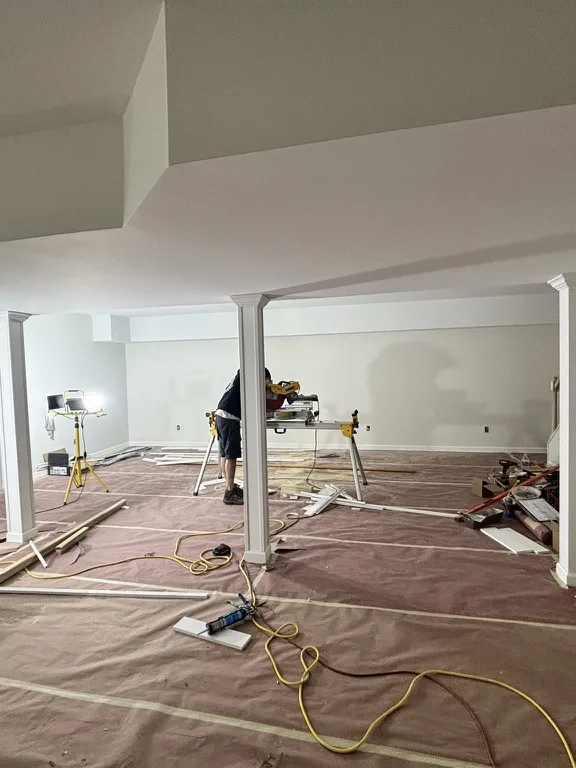
Making the basement comfortable year-round.
Finishing a basement doesn’t automatically make it comfortable. A basement doesn’t heat or cool like the floors above it, and counting on the existing system to handle a newly finished lower level doesn’t always work out.
We installed a ductless mini-split so the basement has its own heating and cooling and its own controls. Downstairs gets set for downstairs without fighting the thermostat upstairs.
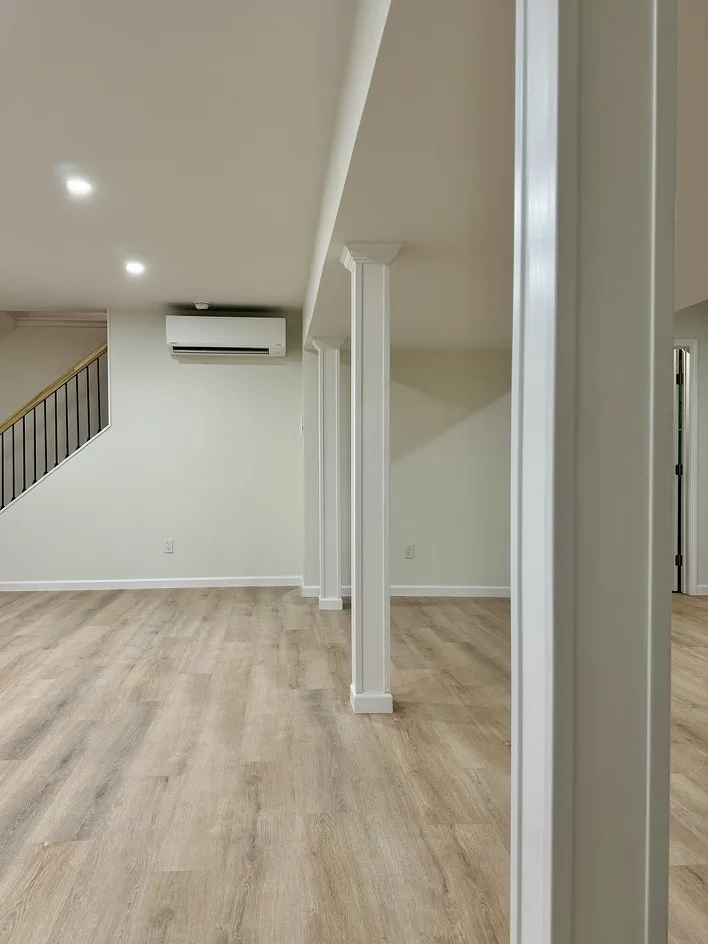
They didn’t have to live in a construction site.
From a building standpoint, the best feature of this house was the outside door into the basement. We ran almost the whole job through it. Crews, tools and materials stayed downstairs instead of becoming part of the family’s day upstairs.
Nothing glamorous about it. It just made the project a lot easier to live with.
This basement didn’t need a wild redesign. It needed to be finished well, planned around how the family actually wanted to use it, and built without turning the rest of the house upside down.
It came in inside the $60,000–$70,000 budget, on schedule, and the homeowners were extremely happy when we handed it back. Sometimes that’s the whole story.
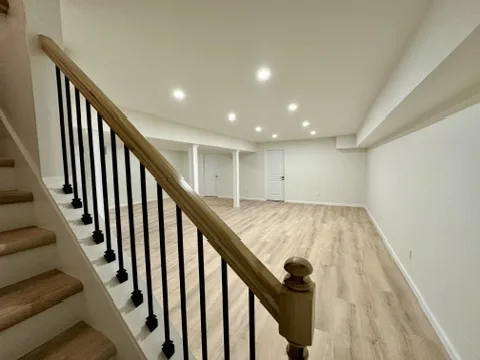
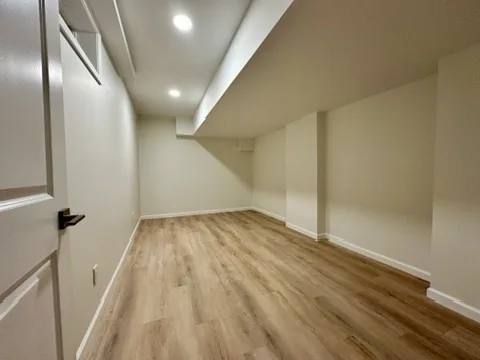
“Excellent quality of work and communication. Our project was done in a timely manner with minimal interruption to our daily lives.”
Let’s see if this makes sense.
Fifteen minutes on the phone. You’ll have a realistic range before we hang up — and if we’re not the right people for it, I’ll tell you.